
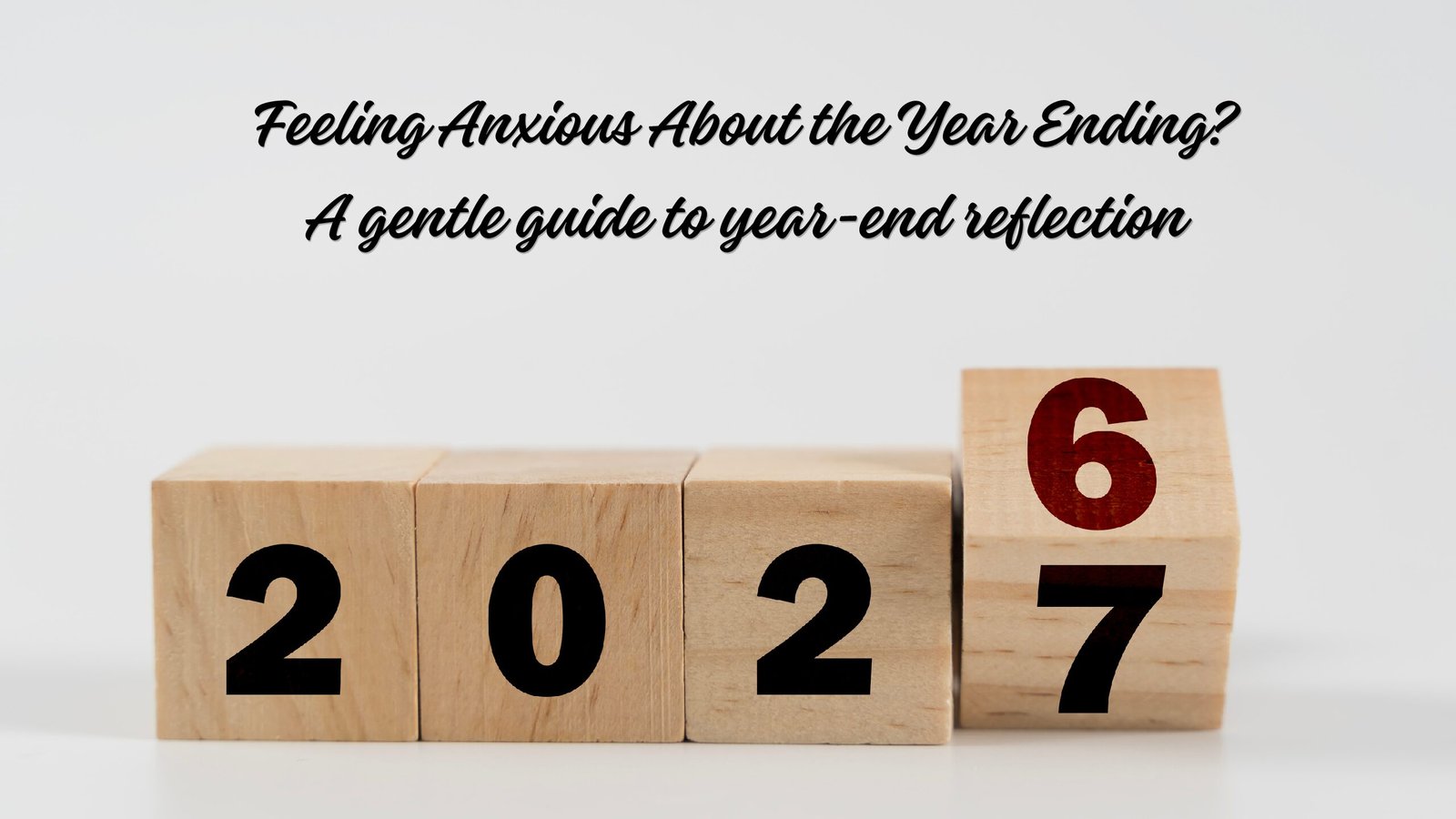
Feeling Anxious About the Year Ending? A Gentle Guide to Year-End Reflection
As the year comes to an end, it is common to feel a mix of emotions — gratitude, excitement, disappointment, pressure, or even anxiety. Social media can make this time of year feel like a deadline for success, encouraging us to look back at everything we achieved and compare our progress with others.
But your year is more than a list of accomplishments.
If you are experiencing year-end anxiety, instead of asking yourself, “What did I achieve this year?”, try asking:
“What did this year teach me that I didn’t know at the beginning?”
This simple shift can make year-end reflection less about judgment and more about understanding yourself.
Why Can the End of the Year Feel So Overwhelming?
The end of the year often brings an expectation to evaluate our lives. We may start thinking about career goals, relationships, finances, health, personal growth, and everything we had planned to accomplish.
When reality does not match the expectations we had at the beginning of the year, it can lead to self-criticism or feelings of inadequacy.
You may find yourself thinking:
- “I should have achieved more.”
- “Everyone else seems to be doing better.”
- “I wasted this year.”
- “I am still in the same place.”
- “I need to completely change my life next year.”
These thoughts can increase stress and anxiety rather than helping us understand what we actually need.
A healthier approach to year-end reflection is to slow down and acknowledge the full picture of your year — including the things that may not be visible to others.
A 5-Minute Year-End Reflection Exercise
Before immediately creating your goals for the coming year, take five minutes to reflect on three questions.
1. What am I proud of?
Your achievements do not have to be dramatic.
Perhaps you started setting boundaries. You handled a difficult situation differently. You continued showing up during a challenging period. You asked for help. You became more aware of your emotions.
Write down three things you are genuinely proud of yourself for.
2. What did I learn?
Every year teaches us something.
Maybe you learned what drains your energy, what relationships feel supportive, what your limits are, or what you genuinely value.
Ask yourself:
“What do I understand about myself now that I didn’t understand at the beginning of this year?”
This question can turn difficult experiences into opportunities for self-awareness and personal growth.
3. What do I want to leave behind?
Reflection is not only about carrying lessons forward. It is also about identifying what no longer serves you.
This could be:
- Constant comparison
- Unrealistic expectations
- People-pleasing
- Guilt around resting
- Perfectionism
- Fear of disappointing others
- Negative self-talk
- Relationships or habits that consistently drain you
You do not have to take everything from this year into the next one.
Your Growth May Not Look Like a Milestone
We often measure personal growth through visible milestones — a promotion, a new job, a relationship, financial progress, a fitness goal, or an academic achievement.
But psychological growth can be much quieter.
Growth can look like saying no without excessive guilt.
It can look like recognising an unhealthy pattern.
It can look like asking for support instead of struggling alone.
It can look like learning to regulate your emotions.
It can look like leaving a situation that no longer feels right.
It can look like becoming more compassionate towards yourself.
Some of the most meaningful changes in our lives may not appear on a conventional list of achievements.
Moving Into the New Year Without Pressure
Once you have reflected on the year, you can think about what you want from the next one.
But you do not need to create a completely new version of yourself.
Instead of asking, “How can I become better?”, consider asking:
“What would support the person I am becoming?”
Your goals can then come from self-awareness rather than self-criticism.
Perhaps you need more rest, healthier boundaries, meaningful relationships, movement, creative time, professional growth, or emotional support.
The goal of reflection is not to judge the year.
It is to understand it.
Before You Close the Chapter
If the year did not go according to plan, that does not automatically mean you failed.
Some years are about building. Some are about healing. Some are about surviving difficult circumstances. Some are about discovering what you want. And sometimes, progress is simply continuing to move forward while learning more about yourself.
So before rushing into your next year’s goals, pause.
Take a breath.
Acknowledge what you carried, what you learned, what you survived, what you changed, and how you grew.
Not every year needs to be measured by milestones. Sometimes the most important progress is becoming more aware of who you are and what you need.
If year-end reflection brings up persistent anxiety, sadness, self-criticism, or feelings of being overwhelmed, speaking with a mental health professional can provide a supportive space to understand these emotions and move forward with greater clarity.
A Simple Year-End Reflection Prompt
Take five minutes today and complete these sentences:
This year, I am proud that I…
This year, I learned that…
This year, I want to leave behind…
As I enter the next year, I want to give myself more…
You don’t need to have all the answers.
Sometimes, pausing to recognise how far you have come is an important form of growth in itself.
Counselling with Harshmeet offers psychological counselling and emotional support for adults and adolescents, including support with anxiety, stress, relationships, life transitions, and personal growth. Contact : +919872788768 to book a consultation.