

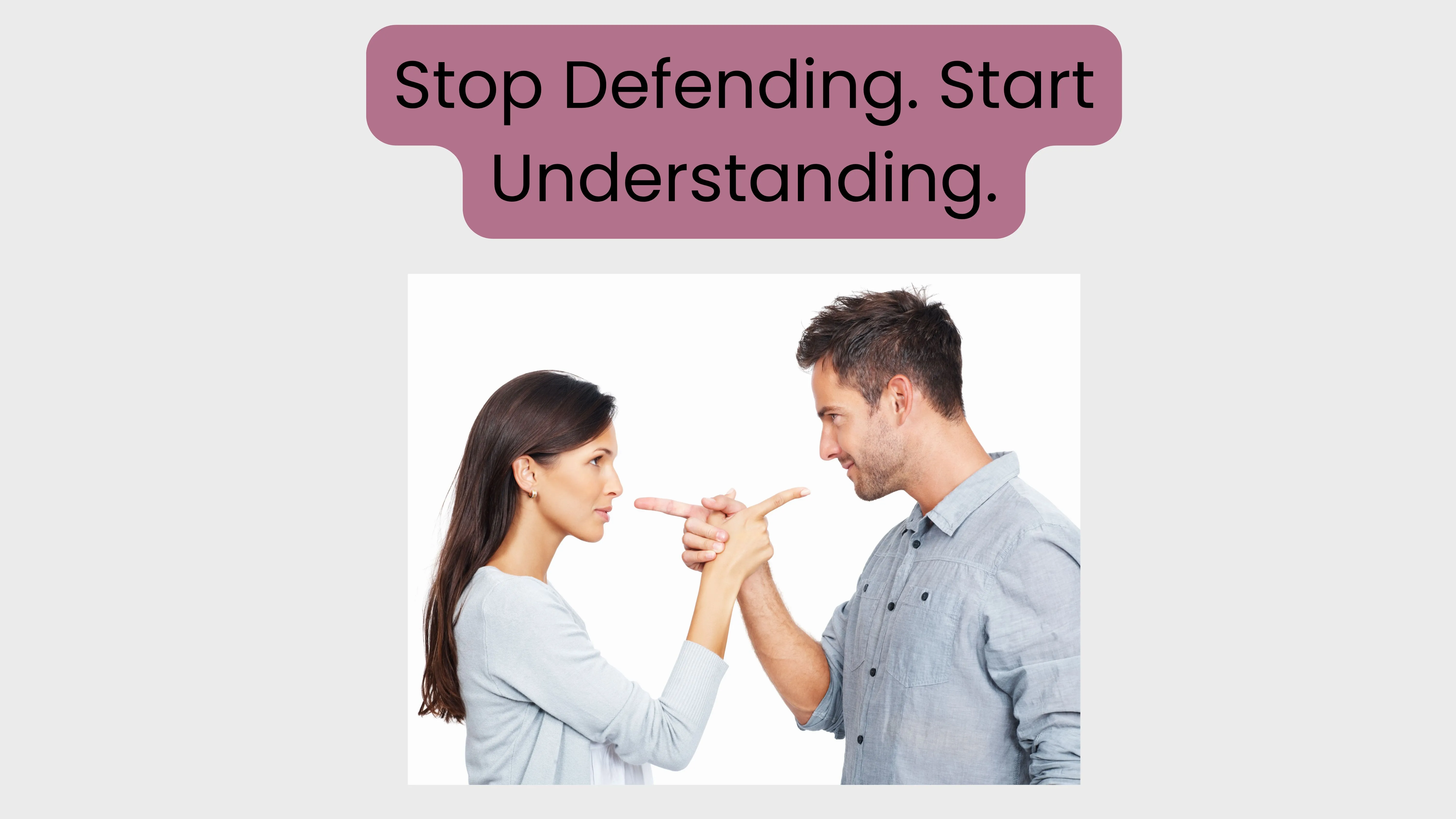
Defensiveness in Relationships: How Taking Responsibility Can Improve Communication
Have you ever tried telling your partner that something hurt you, only to hear, “You do the same thing!” or “I was only trying to explain myself”?
What begins as a simple conversation can quickly turn into an argument. Instead of feeling heard, both partners become focused on defending themselves.
This is called defensiveness, and it is one of the communication patterns that can gradually damage emotional intimacy and trust in relationships.
What Does Defensiveness Look Like in a Relationship?
Imagine a couple, Aisha and Karan.
One evening, Aisha tells Karan, “When you kept checking your phone while I was telling you about my day, I felt ignored.”
Karan immediately responds, “You do the exact same thing! I was only checking a work message. Why do you always make me the bad guy?”
Within seconds, the conversation shifts. Aisha feels unheard, while Karan feels criticised. Neither feels understood.
Now imagine a different response.
Karan feels the urge to justify himself but pauses. He says, “I didn’t mean to make you feel ignored, but I understand why you felt that way. I’m sorry. Let me put my phone away and listen.”
The situation changes because he acknowledges the impact of his behaviour instead of immediately defending his intentions.
Why Do We Become Defensive?
Defensiveness often emerges when feedback feels like a personal attack. We may interpret a partner’s expression of hurt as criticism of our character rather than information about their experience.
Common defensive responses include:
- Counter-attacking: “You do this all the time too.”
- Making excuses: “I was busy. I didn’t have a choice.”
- Blaming: “You are too sensitive.”
- Justifying: Focusing entirely on explaining why our behaviour was reasonable.
- Shifting responsibility: Turning the conversation towards the other person’s mistakes.
While these responses may temporarily protect our ego, they often prevent meaningful communication and emotional repair.
The Antidote to Defensiveness: Taking Responsibility
Taking responsibility means recognising how our actions affect another person, even when hurting them was never our intention.
For example, instead of saying:
“But you do the same thing!”
Try saying:
“I can see why that upset you. That wasn’t my intention, but I understand how it affected you.”
This small shift communicates that the other person’s experience matters.
It is important to remember that taking responsibility does not mean accepting blame for everything, agreeing with every accusation, or ignoring your own feelings. You can acknowledge someone’s experience and still express your perspective.
4 Ways to Reduce Defensiveness and Improve Relationship Communication
1. Pause before reacting
When you feel criticised, notice the immediate urge to justify yourself. Take a breath before responding. A short pause can help you respond more thoughtfully rather than react impulsively.
2. Acknowledge before explaining
Try to understand what your partner is communicating before sharing your intentions. Sometimes, people need to feel heard before they are ready to listen to your perspective.
3. Take responsibility for your part
You don’t have to take responsibility for the entire conflict. Start by identifying what you could have handled differently.
4. Focus on repair, not winning
Ask yourself whether your response is bringing you closer to understanding or simply helping you win an argument. Healthy communication prioritises connection over proving who is right.
Building Healthier Relationships Through Accountability
Healthy relationships are not relationships without disagreements. They are relationships where both individuals can express hurt, listen without immediately attacking or defending, acknowledge their mistakes, and make an effort to repair emotional disconnection.
The next time your partner tells you that something you did hurt them, resist the urge to respond with, “But you do it too!”
Instead, try asking, “Can you help me understand what felt hurtful?”
Sometimes, the most meaningful change in a relationship begins when we stop defending our intentions and start understanding our impact.
A question to reflect on: When someone tells you that you have hurt them, is your first instinct to defend yourself or understand their experience?
About Counselling with Harshmeet
At Counselling with Harshmeet, we work with individuals and couples to develop healthier communication patterns, emotional awareness, conflict-resolution skills, and stronger relationships.
Professional relationship counselling can help couples understand recurring patterns, improve communication, and build emotional connection.
Dr. Harshmeet Kaur | Counselling Psychologist | South Delhi & Online Therapy