The Psychology of Flow: How Deep Engagement Regulates Your Nervous System
We often associate healing with slowing down — resting more, sleeping better, meditating, or taking breaks from stress. And while these are important, psychology also highlights another powerful pathway to emotional well-being: deep engagement.
Have you ever been so absorbed in an activity that:
- time passed quickly,
- your inner critic became quieter,
- your mind stopped racing,
- and you felt mentally lighter afterward?
That psychological state is called Flow.
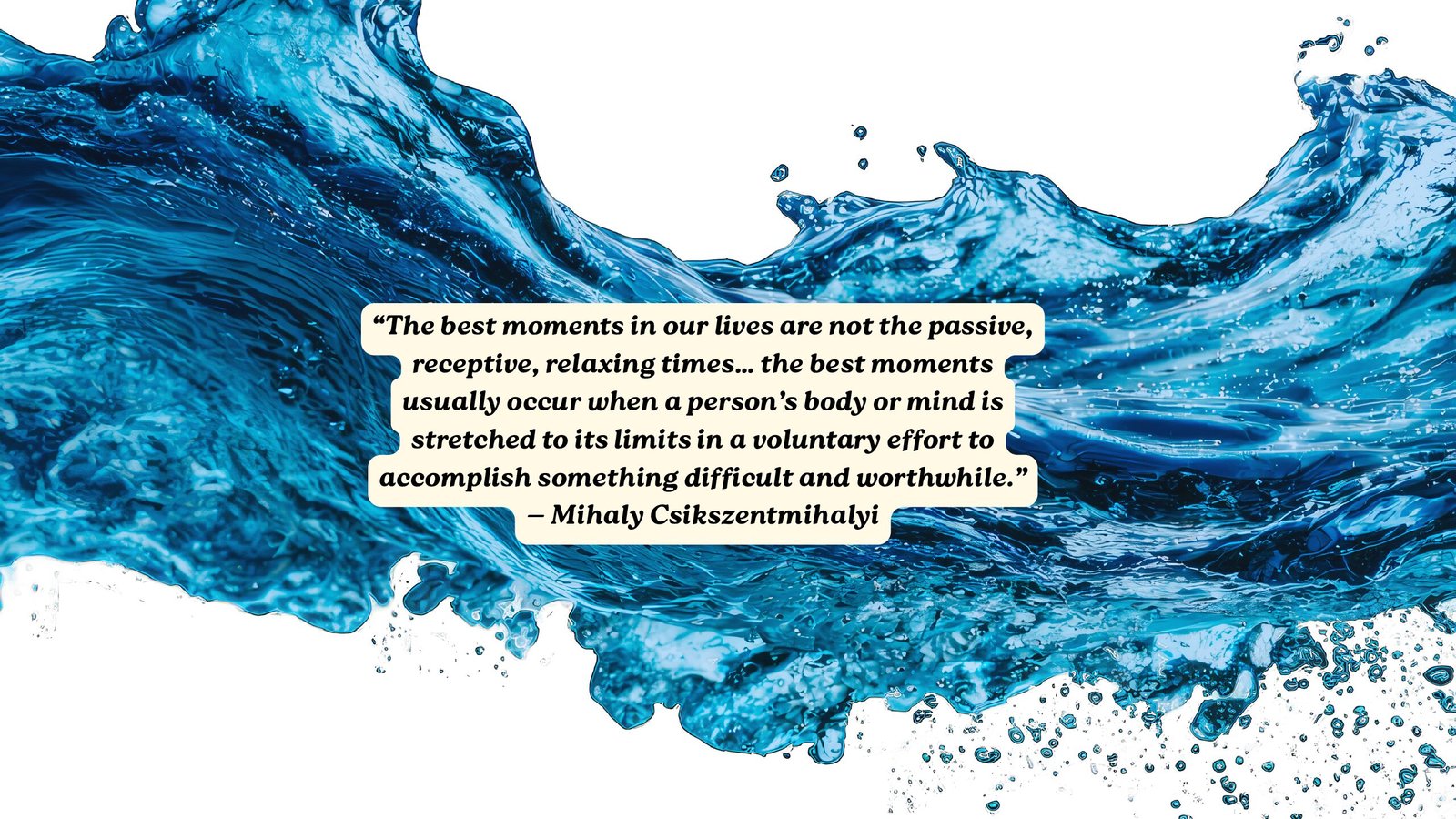
Coined by psychologist Mihaly Csikszentmihalyi, flow refers to a state of complete immersion in an activity where attention becomes fully anchored in the present moment. During flow, people often experience increased focus, reduced self-consciousness, and a sense of effortless involvement.
Interestingly, these moments are not rare or reserved for elite performers. Many people experience flow during ordinary but meaningful activities such as:
- painting,
- cooking,
- dancing,
- gardening,
- singing,
- exercising,
- writing,
- sports,
- spiritual practices,
- or working deeply on something creative or purposeful.
What Happens in the Brain During a Flow State?
Flow is not just a “good mood.” Research suggests it involves measurable neurological and psychological changes.
During deep engagement, the brain releases neurochemicals linked with motivation, focus, reward, and emotional balance, including:
- dopamine,
- norepinephrine,
- endorphins,
- and serotonin-related activity.
These chemicals can enhance concentration, increase motivation, and temporarily reduce excessive self-monitoring and overthinking.
This is one reason people often say:
“I forgot my stress for a while.”
“My mind finally became quiet.”
“I felt like myself again.”
From a nervous system perspective, flow may help shift the brain away from chronic mental fragmentation and toward focused presence.
Nervous System Regulation Does Not Always Look Like Rest
One of the most important psychological insights is this:
Healing is not always passive.
For some individuals, the nervous system regulates not through stillness alone, but through movement, creativity, rhythm, challenge, connection, and meaningful engagement.
A person may feel emotionally calmer after:
- baking,
- playing music,
- attending spiritual singing or sangat,
- running,
- painting,
- hiking,
- or creating something with their hands.
These activities can interrupt cycles of rumination and bring the mind into the present moment naturally.
In therapy, many individuals discover that emotional regulation becomes easier when they reconnect with activities that create healthy absorption rather than constant mental stimulation.
Why Flow Matters in Today’s World
Modern life often keeps the nervous system in a state of overload:
- constant notifications,
- multitasking,
- social comparison,
- emotional exhaustion,
- and chronic stress.
As attention becomes fragmented, many people struggle to feel mentally present. Even moments of rest may not feel restorative because the mind continues racing internally.
Flow states can serve as psychological anchors in this overstimulated environment. They create moments where the brain is engaged enough to quiet unnecessary mental noise.
In other words, flow gives the mind somewhere healthy to go.
How to Cultivate More Flow in Daily Life
Flow cannot always be forced, but it can be encouraged.
Start by asking yourself:
“What activity makes me lose track of time in a healthy way?”
Not through avoidance.
Not through numbing.
But through genuine engagement.
This activity could be:
- art,
- music,
- movement,
- reading,
- gardening,
- sports,
- cooking,
- reflective practices,
- or meaningful work.
Even dedicating one hour a week to a deeply engaging activity can support emotional well-being more than we often realize.
We often believe healing only happens in silence or rest.
But sometimes healing also happens when:
- the mind becomes fully present,
- the inner critic softens,
- and attention reconnects with something meaningful.
Sometimes the moments where we “lose ourselves” are actually the moments our nervous system feels safest.
And in a world filled with distraction and emotional overload, creating intentional moments of flow may be one of the most overlooked forms of psychological care.
By: Dr. Harshmeet Delhi-based Mental Health Expert